Zero Trust Network
What It Is, How It Works, and How to Build It
Modern organizations no longer operate inside a fixed perimeter. Zero Trust ensures every access request is verified before being allowed.
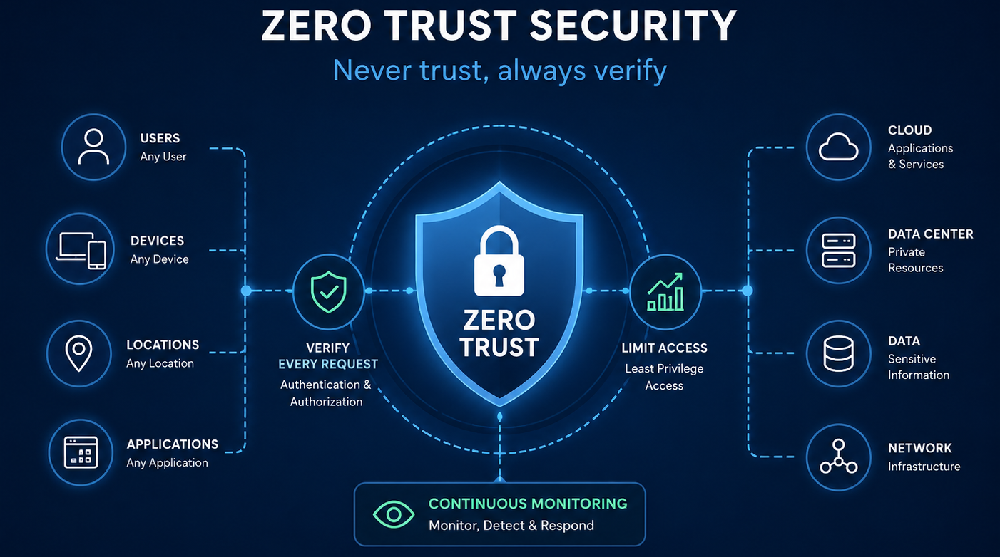
Zero Trust Network
Zero Trust is built on the assumption that nothing—inside or outside your network—is inherently trustworthy. It replaces the traditional “castle-and-moat” model with continuous verification and context-based access control.
1. What Is a Zero Trust Network?
Every access request is treated as risky until verified.
- Internal users are not automatically trusted
- Access depends on identity and context
- Trust is continuously evaluated
2. How Zero Trust Works
Identity First
- Multi-factor authentication
- Device identity validation
- User behavior monitoring
Context-Aware Access
- Location and device health
- Time-based rules
- Risk-based decisions
Least Privilege
Users get only the minimum access required.
Micro-Segmentation
Divide networks into smaller secure zones.
Continuous Monitoring
Access is constantly evaluated and adjusted.
3. Why Zero Trust Exists
Traditional VPN-based models allow attackers to move freely once inside.
4. How to Build Zero Trust
5. Common Mistakes
- MFA alone is not Zero Trust
- Keeping VPN alongside Zero Trust
- Ignoring user experience
- No monitoring visibility
Final Take
Zero Trust is a shift from network-based security to identity and context-based control.